
Rope vs Cuffs: Which Restraint Should You Start With?
By the Kinky Beds teamPublished 2 min read
Quick answer
- Cuffs are faster, easier and more forgiving: the best place for beginners to start.
- Rope is versatile and beautiful but is a skill. Learn safe ties before relying on it.
- Whichever you choose: two-finger rule, safety shears within reach, nothing around the neck.
Cuffs and rope are the two classic restraints. They feel different, take different amounts of skill, and suit different moods. Here's how to choose.
Side by side
| Cuffs | Rope | |
|---|---|---|
| Speed on and off | Seconds | Minutes, depending on the tie |
| Skill needed | Very little | Real skill for safe ties |
| Pressure | Spread evenly by a wide, padded cuff | Depends on the tie and the rope |
| Quick release | Buckles, clips or hook-and-loop | Needs a release-friendly tie, or shears |
| Versatility | Wrists and ankles, attached to anchors | Almost unlimited |
| Look | Neat, classic | Decorative, artistic |
| Best for | Beginners, quick setups, restraint beds | Couples who want to learn a craft together |
Why cuffs are the best starting point
A good pair of wide, padded cuffs does most of the safety work for you: the width spreads pressure, the padding protects skin, and a buckle or clip opens in a second. Clip them to an under-mattress strap or to a bed's restraint points and you're set. See our beginner's guide to bed restraints.
When rope makes sense
Rope is rewarding if you enjoy learning: the process of tying can be as much a part of the experience as the restraint itself. The trade-off is that poorly tied knots can tighten under tension and press on nerves. If rope appeals:
- Learn a small number of simple, release-friendly ties from a reputable teacher or course.
- Use soft rope (cotton is easy to handle) of a suitable thickness.
- Practise on a limb or a pillow before using ties on a partner.
- Never tie around the neck, and keep safety shears within reach.
Combining both
Many couples use cuffs for the restraint and a short length of rope or a tether to connect the cuff to the anchor. That keeps the part that touches skin padded and quick to release.
Care
Leather and neoprene cuffs and cotton, hemp and synthetic rope all need different care. See cleaning and caring for restraints and the restraint materials guide.
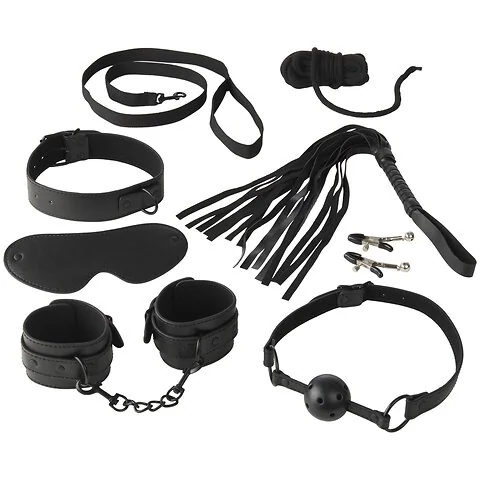
The Kinky Bundle add-on
£49.99
- A starter set of restraints and accessories, including wrist cuffs, soft rope and a flogger
- Ordered with The Sovereign Bed, it ships with the bed in the same discreet delivery
- Sealed intimate items are returnable only unopened, unless faulty
Frequently asked questions
Are cuffs or rope better for beginners?
Cuffs. Wide, padded cuffs spread pressure, need no special skill and release in seconds.
Is rope bondage dangerous?
It carries more risk than cuffs because knots can tighten and press on nerves. Learn simple, release-friendly ties properly, keep safety shears close, and never tie around the neck.
What rope is best for beginners?
Soft cotton rope is easy to handle and gentle on skin. Learn ties properly before relying on rope for restraint.
This guide is general information for adults, not medical or legal advice. If anything feels wrong during or after restraint play (lasting numbness, pain or anxiety), stop and seek medical advice. Questions about The Sovereign Bed: support@kinkybeds.com.