12 Beginner Bondage Ideas for Couples (Gentle and Safe)
By the Kinky Beds teamPublished 7 min read
Quick answer
- Beginner bondage can start with no equipment at all: a simple "don't move your hands" rule.
- Progress to a silk scarf, then padded cuffs attached to secure points.
- Change one thing at a time and keep sessions short.
- Consent, a safe word, safety shears and aftercare apply to every idea.
The best beginner bondage ideas are simple, gentle and easy to stop: a verbal "keep your hands above your head" rule, holding your partner's wrists, a loosely tied silk scarf, a blindfold, and then soft padded cuffs attached to an under-mattress system or a bed with purpose-built points. Agree everything in advance, keep it short, check in often and finish with aftercare.
Ground rules for every idea
- Agree it in advance, clothed and relaxed. See our kink negotiation checklist.
- Safe word plus non-verbal signal. See safe word ideas for couples.
- Safety shears within reach for anything that ties or buckles.
- Two fingers under every restraint, regular circulation checks.
- Never leave a restrained partner alone; stay sober.
Level 1: no equipment
1. The "don't move" rule
One partner is told to keep their hands above their head, or by their sides, no matter what. Restraint by instruction is surprisingly powerful.
2. Hold their wrists
Gently hold your partner's wrists while kissing. Notice how it changes the dynamic.
3. Hands behind your back
Your partner keeps their hands clasped behind them while you take the lead.
4. The statue game
One partner must stay perfectly still while the other explores with light touch. Moving means starting again.
Level 2: soft and simple
5. A silk scarf
A wide silk scarf wrapped loosely around both wrists and tied in a bow. Easy to slip out of.
6. Blindfold
Covering the eyes heightens every other sense. See blindfold play ideas.
7. Sensation tease
While your partner keeps still (by rule or scarf), use a feather, silk or a soft flogger. See sensory play for couples.
Level 3: cuffs and anchor points
8. Padded wrist cuffs, clipped together
Wide, padded cuffs clipped to each other in front. No anchor needed.
9. Wrists to the bed
Clip the cuffs to an under-mattress strap or a purpose-built restraint point, elbows bent and arms resting on a pillow. See how to set up under-bed restraints.
10. Wrists and ankles
A spread position with slack in every strap. See how to tie someone to a bed safely.
Level 4: adding a story
11. Captive role-play
A playful scenario with agreed characters. See role-play ideas for couples.
12. The switch
Swap roles halfway through the evening, or on the next date. See dom, sub and switch.
How to progress
Move up one level only when you have both enjoyed the previous one. Change one thing at a time: a new restraint, a longer session or adding a blindfold. Our beginner bondage readiness quiz and the restraint readiness checklist help you decide when you are ready.
What to avoid as a beginner
- Metal handcuffs, cable ties, thin cord, anything that tightens.
- Tying to headboard slats, posts, legs or curtain rails.
- Anything around the neck.
- Long sessions or positions that strain shoulders.
- Mixing restraint with alcohol.
Choosing your first kit
Wide, padded cuffs with quick-release fastenings and a secure anchor. Our bed restraints buying guide explains the options, and the restraint materials guide compares leather, neoprene and fabric.
Aftercare
After any of these ideas, release gently, stretch, hold each other and talk about your favourite moment. See aftercare after intimacy.
How to keep it fun
Beginner bondage works best when it feels like play rather than a performance. Laugh when things go wrong, celebrate what worked and keep a shared list of ideas you would like to try next. Some couples take turns choosing an idea from the list each month, so both partners have a say and nobody feels they are always the one asking.
A four-week plan for beginners
If you like structure, spread your first steps over a few weeks. There is no rush, and each week gives you time to talk about what you enjoyed.
- Week 1: talk. Fill in a yes, no, maybe list separately, compare answers, and agree a safe word and a non-verbal signal.
- Week 2: no equipment. Try "hands above your head" or holding wrists gently, with a blindfold if you both like the idea.
- Week 3: soft restraints. Padded wrist cuffs, loosely fastened, for ten to fifteen minutes, with check-ins and aftercare.
- Week 4: review and choose. Talk about what you would like more of, what you would skip, and whether to add ankles, a different position or a little role-play next time.
If anything feels wrong at any stage, go back a step. Moving slowly is not a failure; it is how good experiences are built.
Signs you are ready for the next level
- You both use check-ins and the safe word comfortably, and you have practised them.
- Releasing restraints is quick and smooth, and the safety shears are always within reach.
- You both look forward to sessions rather than feeling nervous for days.
- Aftercare happens naturally and you talk honestly the next day.
- You are both curious about the same next step, not just one of you.
If one of you is not there yet, stay at the current level for a while longer. Our beginner bondage readiness quiz is a light-hearted way to check in together.
Keeping it comfortable for both bodies
Everybody is different. Taller partners may need longer straps, people with shoulder or wrist problems may prefer arms at their sides, and anyone who feels the cold will want a blanket close by. Adjust the idea to the body, never the other way round, and swap positions often.
What every beginner kit needs
- Padded wrist cuffs that fasten securely and release quickly.
- Safety shears with blunt tips, kept within reach every time.
- A soft blindfold that can be pushed up easily.
- A blanket and water for aftercare.
- Somewhere to anchor that is built for it, such as under-bed straps or a bed with integrated restraint points, rather than a lamp, a radiator or a flimsy headboard.
The optional Kinky Bundle includes leather wrist cuffs, a suede flogger, soft bondage rope and a collar with leash, among other pieces; you do not need everything at once to start.
Frequently asked questions
What is the easiest bondage for beginners?
A verbal rule such as "keep your hands above your head", or holding your partner's wrists. No equipment needed.
What should beginners use for bondage?
Wide, padded cuffs with quick-release fastenings, attached to an under-mattress system or purpose-built restraint points.
Is a scarf safe for bondage?
A wide silk scarf tied loosely in a bow is fine for a playful first try. Avoid hard knots and anything that tightens.
How do we know when to try more?
When you have both enjoyed the previous step and talked about it afterwards. Change one thing at a time.
Do we need special furniture for bondage?
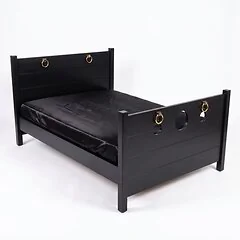
No. Under-mattress straps work on most beds. Some couples later choose a bed with concealed, purpose-built restraint points so they do not need to set anything up.
How long should beginner bondage last?
Ten to twenty minutes is plenty at first. Keep arms comfortable and bring them down for a rest regularly.
Can bondage be part of a date night?
Absolutely. Pair a gentle idea with dinner, music and a tidy room. See our kinky date night ideas for inspiration.
What is the easiest bondage idea for complete beginners?
"Hands above your head" with no equipment at all: one partner agrees to keep their hands in place while the other takes the lead. It needs nothing but trust and a safe word.
Do we need a special bed for beginner bondage?
No. Many beginner ideas need no equipment at all, and padded cuffs or under-bed straps work with most beds. A bed with integrated restraint points simply makes things easier and more discreet if you find you enjoy it.