
A Guide to Cabin Beds and High-Sleepers
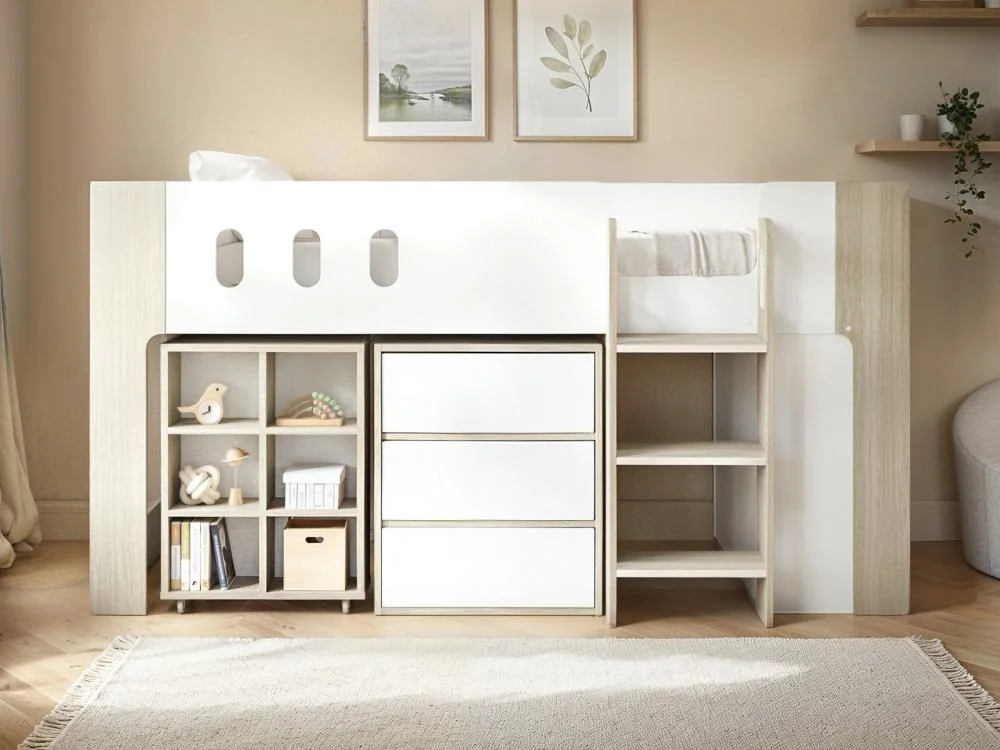
Small bedrooms have a habit of running out of floor space just when you need it most, usually the moment a desk or a wardrobe needs to go somewhere. Cabin beds and high-sleepers both solve this the same way, by lifting the bed and giving that floor space back. From across the room, they can look almost identical, but the height difference between them changes everything that matters, from the age a child needs to be to the amount of space you actually get underneath. Here's how to tell them apart and work out which one earns its place in your child's room.
Cabin bed vs high-sleeper: what's the difference?
The short answer is height. A cabin bed's platform sits noticeably lower than a high-sleeper's, close enough to the ground that a young child can climb in and out without much fuss. A high-sleeper goes much higher, usually with a ladder, which means a bigger gap underneath but also a greater commitment in terms of age and confidence. If your child is younger or new to a raised bed, a cabin bed is the safer starting point. If they're older and after more usable space below, a high-sleeper makes better use of the room.
What is a cabin bed?
Think of a cabin bed as sitting at roughly bunk-bed height, just off the ground to fit drawers, a desk, or a slim wardrobe below. It's a gentler introduction to a raised bed than a high-sleeper, with a shorter climb that suits children who aren't quite ready to scale a ladder every night.
What age is a cabin bed suitable for?
Most cabin beds work well from around age 4, once a child can climb in and out without help. That said, always check the age guidance listed against the specific bed, since platform height and rail design vary between models. Guardrails on every open side are worth checking for, too, regardless of the age recommendation.
Cabin bed ideas for small rooms
- Storage cabin beds: Drawers or shelving built straight into the base, perfect when there's no room for a separate chest of drawers.
- Desk cabin beds: A study spot underneath that earns its keep once homework becomes a nightly routine.
- Wardrobe cabin beds: A full wardrobe worked into the frame, freeing up a wall for something else.
- Cabin beds with a trundle: A second bed that pulls out from underneath, handy for sleepovers when you don't have a second bedroom to spare.
What to look for in the best cabin beds
The best cabin beds get the basics right before anything else: a solid wood or metal frame, guardrails on any open side, and a base built for the mattress size you actually need. If storage is the main draw, work out what needs a home before choosing between drawers, a wardrobe or open shelving. It's easy to be won over by a clever design that doesn't quite fit what you own. Our kids' storage beds range puts cabin beds alongside other storage options, making comparisons straightforward.
Choosing a mattress for a cabin bed
Cabin beds generally take a standard single mattress, but the platform depth can be shallower than a normal bed frame, so it's worth checking the maximum mattress depth before you buy one. A foam or hybrid mattress suits these frames well, since it's easier to fit into a shallower base without sitting too high above the guardrails. Have a look at our kids' mattresses range to find one that fits the frame properly.
What is a high-sleeper bed?
A high-sleeper takes the same idea as a cabin bed and raises the stakes, quite literally. The frame sits much higher, reached by a ladder, which opens up a serious amount of space underneath. Enough for a desk, a small sofa, a wardrobe or even a proper play den. It's the better choice once a child is ready for the taller climb and wants more from that space below than just a couple of drawers.
Take a look at our high-sleeper beds to see the different layouts available.
What age is a high-sleeper suitable for?
High-sleepers are generally recommended from age six upwards, in line with the safety standard covering upper bunk beds. Below that age, the platform height and ladder are usually too much for a child to manage confidently on their own. As with cabin beds, always check the manufacturer's own age guidance for the exact model before buying.
High-sleeper bed ideas
- Desk high-sleepers: A proper study space underneath, a favourite for older children and teenagers alike.
- Gaming high-sleepers: Room for a chair and screen setup below the bed. Our gaming beds collection includes several high-sleeper designs built with this in mind.
- Den or sofa high-sleepers: A cosy hideout underneath, built around a small sofa or a pile of bean bags rather than a desk.
- Wardrobe high-sleepers: Built-in hanging space and shelving, useful when floor area is tight.
What to look for in the best high-sleepers
Ladder design matters more than it seems at first glance. Wide, flat rungs are easier and safer to climb than thin, round bars, especially during the first year or two of use. Check the guardrail height, too, since a taller platform requires a taller rail to do its job. Beyond safety, consider what's going on underneath before you buy, as some frames are designed for a specific desk or wardrobe, and won't suit a different layout.
Where to position a high-sleeper in the room
Ceiling height is the first thing to check, ideally leaving enough room above the platform for your child to sit up without ducking. Keep the bed away from windows, curtains and any light fittings that a child could reach once up there. A wall close to one side of the frame can also work in your favour, giving an extra bit of stability for anyone climbing the ladder.
How to build a high-sleeper bed
High-sleepers come with more parts than a standard frame, so it pays to set aside proper time and rope in a second pair of hands. Read the full instructions before picking up a single bolt, rather than working it out page by page as you go, so you understand how the whole frame fits together. Once it's built, double-check that every bolt and fitting is tight, and use any wall-fixing brackets that come with it. They're not optional extras.
Before it's slept in for the first time, give the whole frame a firm shake. It should barely move.
Looking after a cabin bed or high-sleeper
Both bed types hold up well over time if you keep an eye on the moving parts. Check bolts and fittings every few months, since regular climbing can work them loose gradually without anyone noticing. Wooden frames benefit from a wipe-down rather than harsh cleaning products, and it's worth confirming that the mattress is turned or rotated in line with the manufacturer's advice to ensure even wear under the extra weight of a raised base.
For more on getting the sizing right before you buy, our UK bed sizes and mattress size guide and bunk bed buyer's guide go into the practical details in more depth.