
Choosing the right bed size is essential for a good sleep. Pick one that's too small and you’ll struggle to get comfy. Pick one that's too big and there's no space left to move in your bedroom. This guide covers all the standard UK bed sizes, their dimensions and who each one suits, so you can find the right fit for you, your sleep habits and your space.

CotW 60cm x L 120cm

Toddler BedW 70cm x L 140cm

Shorty BedW 75cm x L 175cm

Small Single BedW 75cm x L 190cm

Single BedW 90cm x L 190cm

Small Double BedW 120cm x L 190cm

Double BedW 135cm x L 190cm

King BedW 150cm x L 200cm

Super King BedW 180cm x L 200cm
Bed and mattress size chart
Here are the standard UK bed sizes in order, from smallest to largest, with bed dimensions in centimetres and feet.
| Bed/Mattress Sizes | W x L (cm) | W x L (ft) |
|---|---|---|
| Cot Bed Size | 60 x 120 | 2’0" x 4’0" |
| Toddler Bed Size | 70 x 140 | 2’3" x 4’6" |
| Shorty Bed Size | 75 x 175 | 2’5" x 5’8" |
| Small Single Bed Size | 75 x 190 | 2’5" x 6’3" |
| Single Bed Size | 90 x 190 | 3’0" x 6’3" |
| Small Double Bed Size (Queen Bed Size) | 120 x 190 | 4’0" x 6’3" |
| Double Bed Size | 135 x 190 | 4’5" x 6’3" |
| King Bed Size | 150 x 200 | 5’0" x 6’6" |
| Super King Bed Size | 180 x 200 | 6’0" x 6’6" |
Are bed sizes the same as mattress sizes?
Not exactly. A bed is named after the mattress size it's built to hold, so a king bed frame takes a king mattress. The frame itself is usually a little bigger.
How much bigger depends on the design. Upholstered frames, chunky wooden frames, sleigh beds and ottoman beds with padded sides can all add to the overall width and length. Headboards and footboards add length too. This means, for example, double bed dimensions can vary from one frame to the next, even though both take the same 135 x 190cm mattress.
UK mattress sizes are standardised, so this guide works from those. Before you order, check the full dimensions on each product page and measure the space in your room.
UK mattress sizes
Cot mattress size
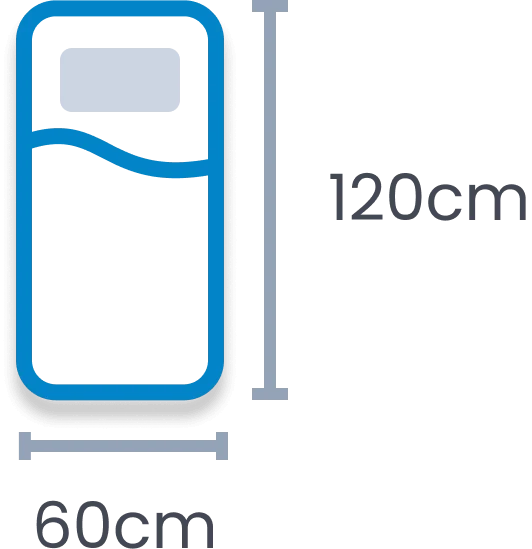
A standard cot mattress measures 60 x 120cm (2’0" x 4’0").
Suitable for: babies and young toddlers, from birth until they're ready to move to a toddler bed.
Toddler mattress size
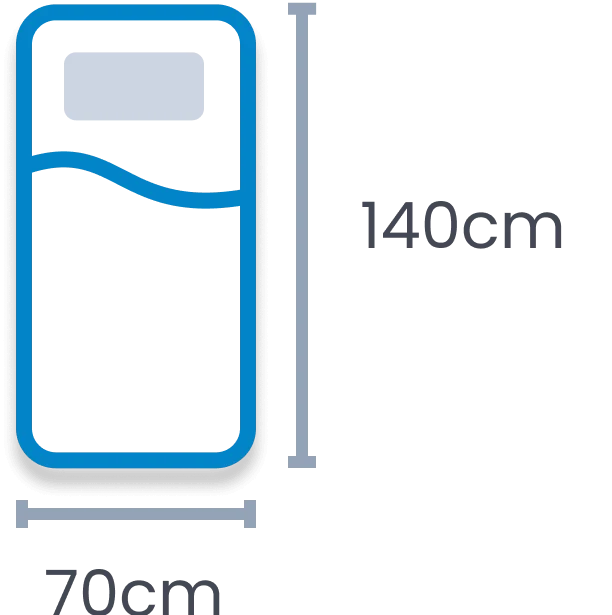
A toddler mattress measures 70 x 140cm (2’3" x 4’6"), giving little ones more room than a cot.
Suitable for: toddlers who have outgrown their cot, usually from around 18 months to 2 years old.
Shorty mattress size

A shorty mattress measures 75 x 175cm (2’5" x 5’8"). It's as wide as a small single, but 15cm shorter.
Suitable for: young children moving up from a toddler bed, and box rooms where space is tight.
Small single mattress size
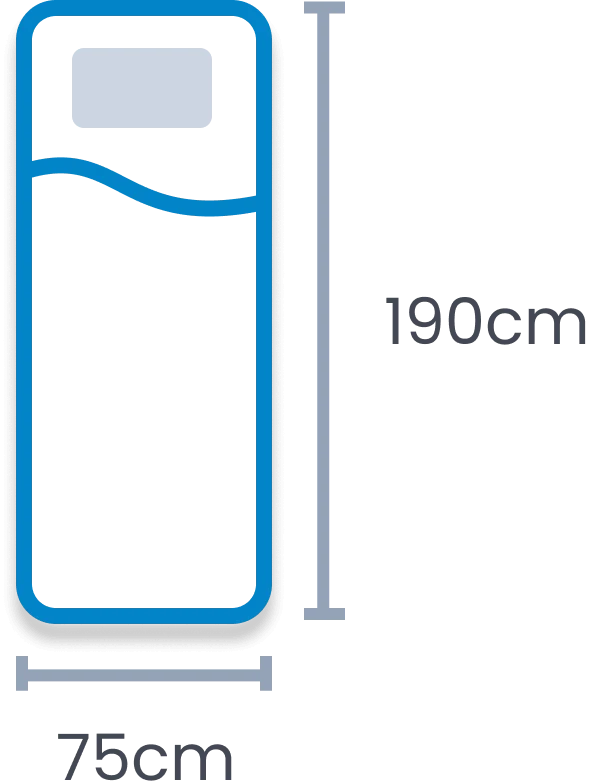
A small single measures 75 x 190cm (2’5" x 6’3"). Full length, just narrower than a standard single. It's a common size for bunk beds and cabin beds.
Suitable for: children, teens and small bedrooms that can't fit a standard single.
Single mattress size

A single mattress measures 90 x 190cm (3’0" x 6’3").
Suitable for: children, teenagers, solo adult sleepers and guest rooms.
Small double mattress size (queen mattress size)
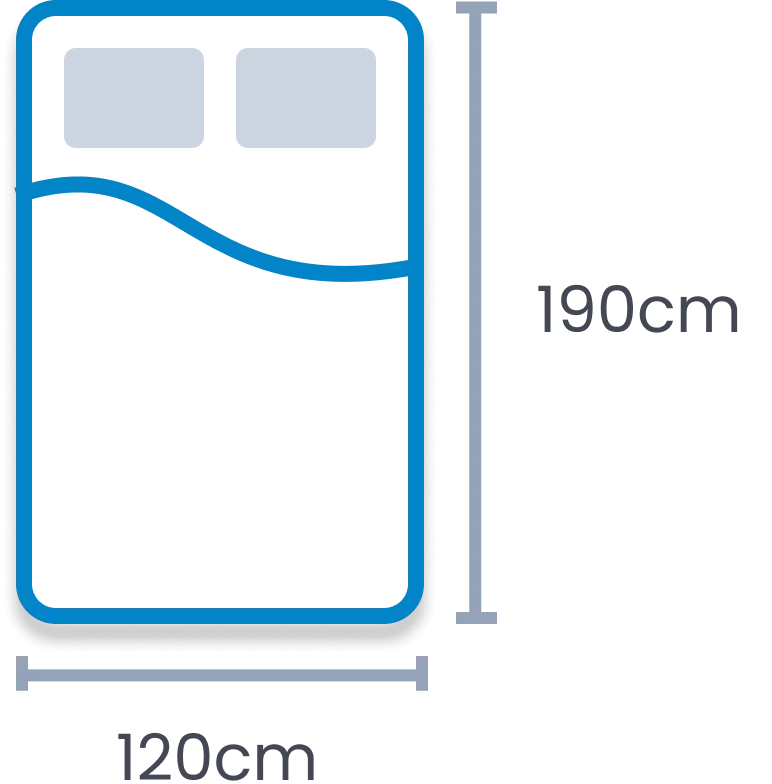
Standard small double mattress dimensions are 120 x 190cm (4’0" x 6’3"). They’re also known as three-quarter size or queen size mattresses.
Suitable for: solo adults who want extra room, teens, and couples in smaller bedrooms.
Double mattress size
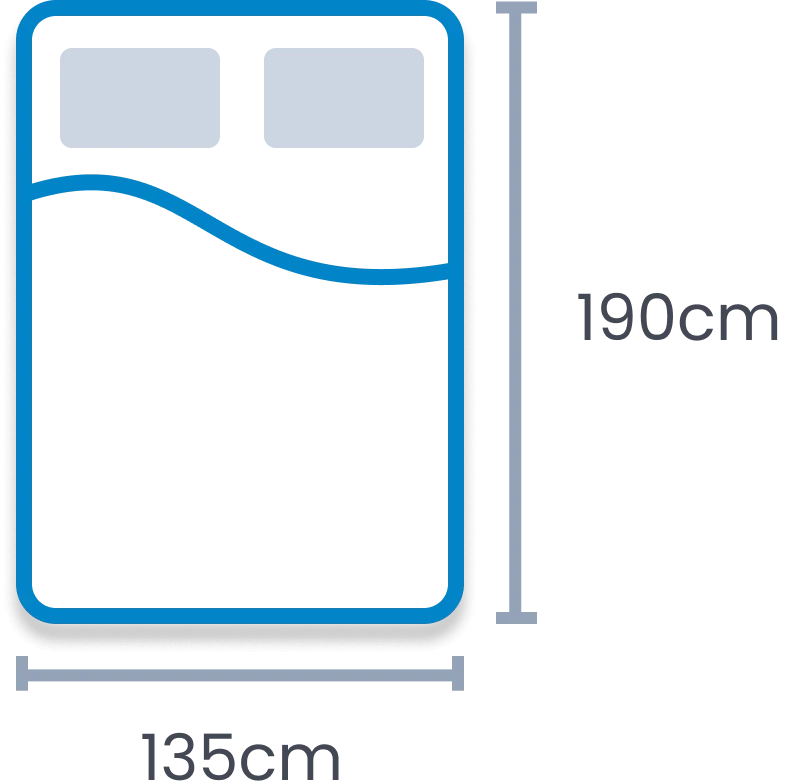
Standard double mattress dimensions are 135 x 190cm (4’5" x 6’3"). It's the most popular bed size in the UK.
Suitable for: couples, and solo sleepers who like to stretch out.
King mattress size
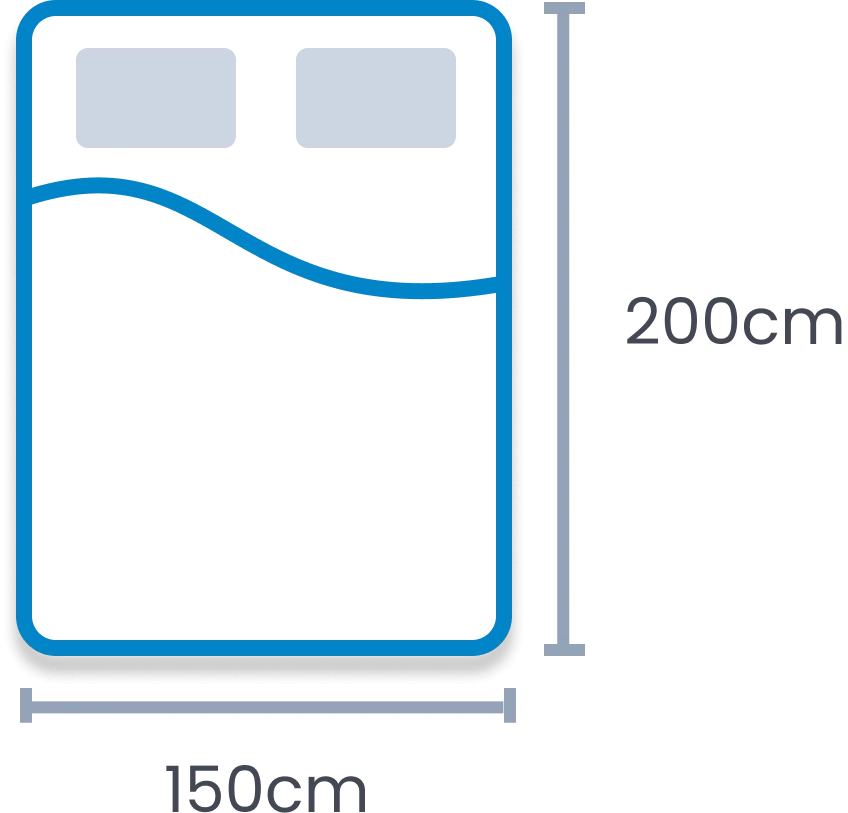
Standard king mattress dimensions are 150 x 200cm (5’0" x 6’6"). That's 15cm wider and 10cm longer than a double.
Suitable for: couples who want more space, and taller sleepers.
Super king mattress size
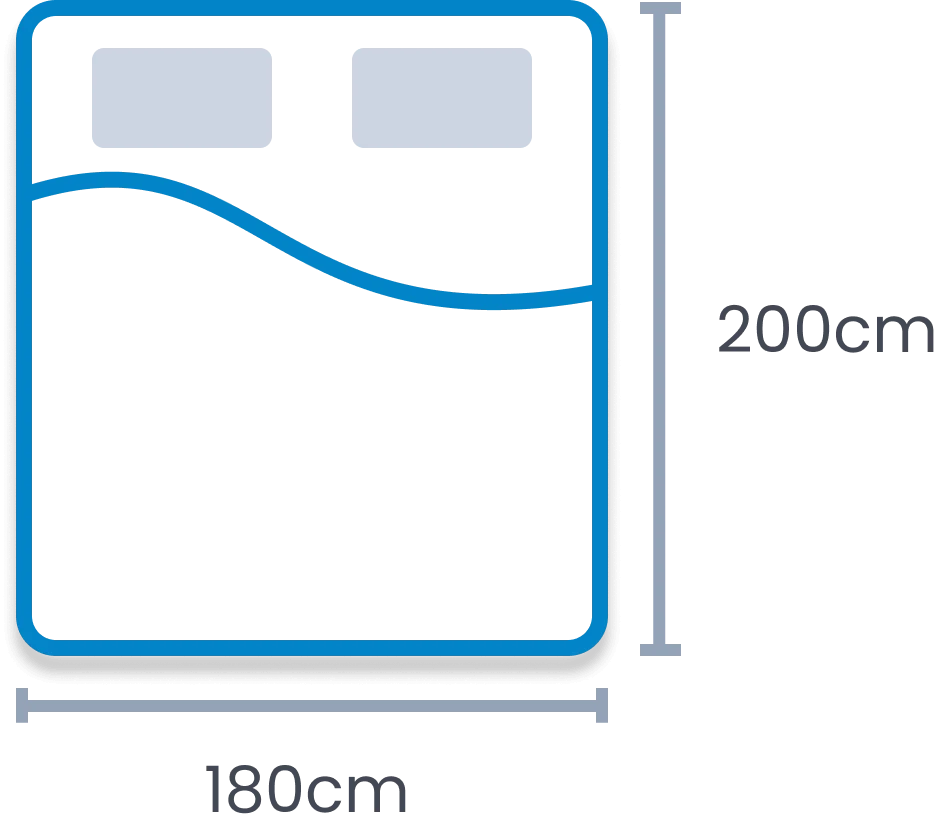
A super king mattress measures 180 x 200cm (6’0" x 6’6"), the largest standard UK size.
Suitable for: couples who want plenty of room or who share the bed with children or pets, and larger bedrooms.
EU bed and mattress sizes
European (continental) mattress sizes aren’t the same as UK ones. Most are 200cm long, which makes them longer than most UK sizes, and widths can differ too. Exact sizes can vary between countries and brands. The sizes below are the most common ones but make sure to check the dimensions of the exact mattress before buying.
EU single mattress size

An EU single mattress measures 90 x 200cm (2’11" x 6’7"). They’re the same width as a UK single, but 10cm longer.
Suitable for: children, teens and taller solo sleepers who need extra length.
EU small double mattress size
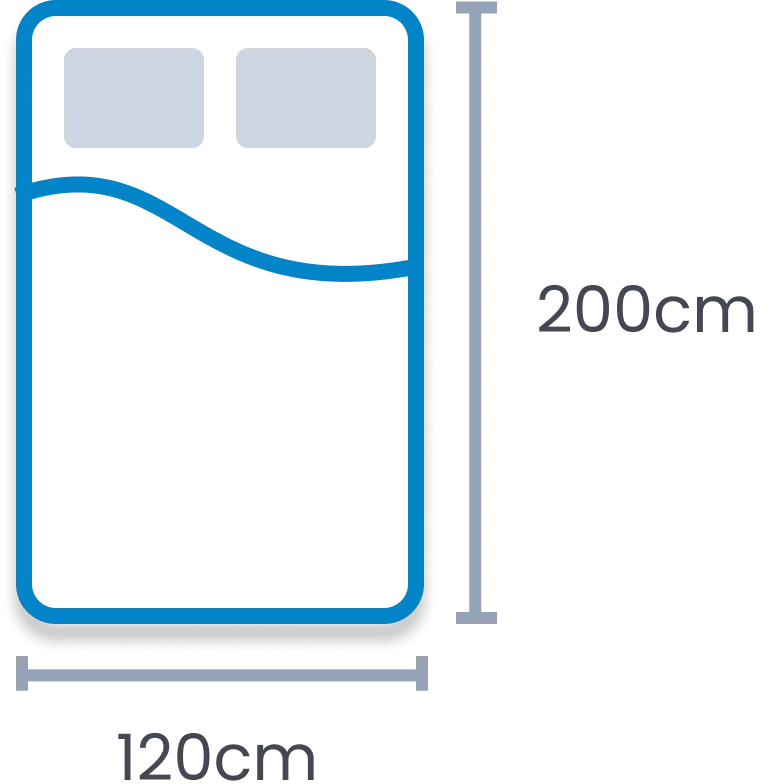
An EU small double measures 120 x 200cm (3’11" x 6’7"). It matches the UK small double in width but adds 10cm of length.
Suitable for: solo adults who want more room to spread out.
EU double mattress size
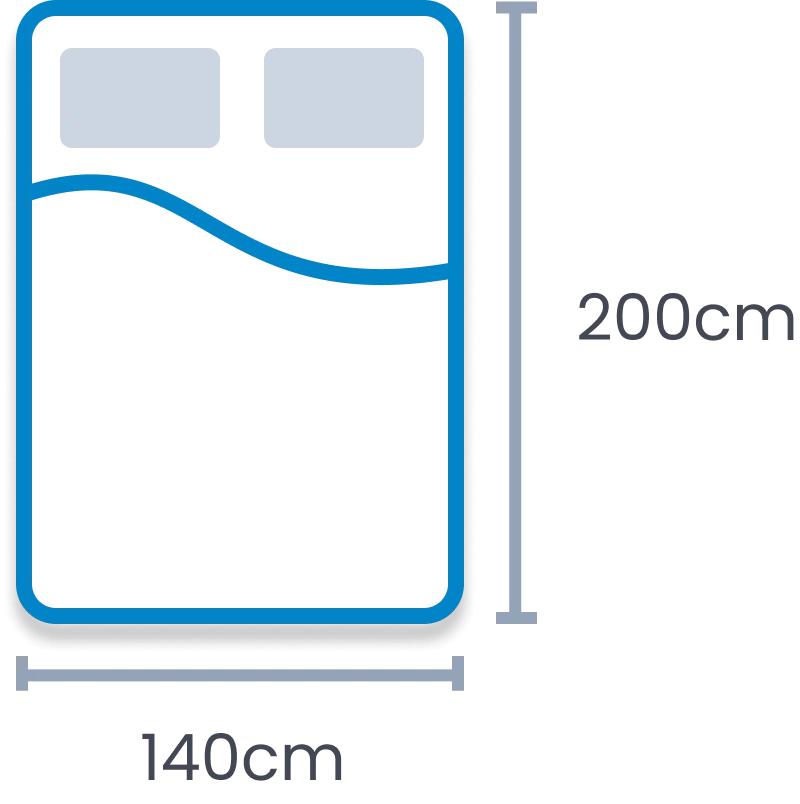
An EU double measures 140 x 200cm (4’7" x 6’7"). That's 5cm wider and 10cm longer than a UK double.
Suitable for: couples who want a little more space than a UK double offers.
EU king mattress size
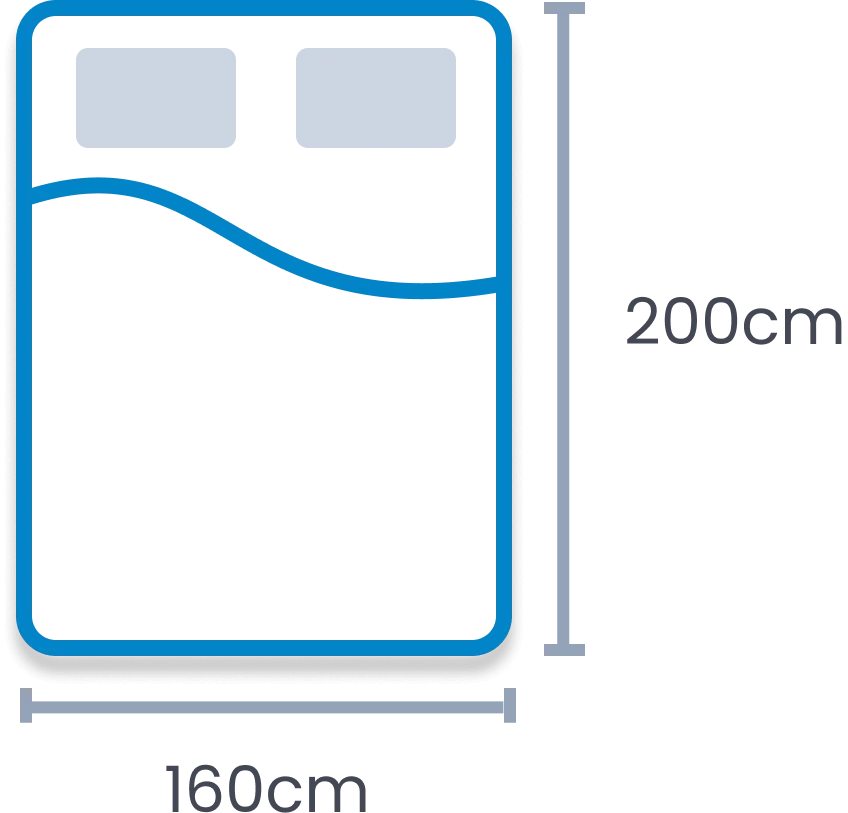
An EU king measures 160 x 200cm (5’3" x 6’7"). It's 10cm wider than a UK king, with the same length.
Suitable for: couples who want extra width without moving up to a super king.
EU super king mattress size
An EU super king measures 180 x 200cm (5’11" x 6’7"). This is the one size where UK and EU dimensions match.
Suitable for: couples sharing with children or pets, and people with larger bedrooms.
What is the standard mattress depth?
Most mattresses are between 20cm and 30cm deep (roughly 8 to 12 inches, or up to 1ft). Thinner mattresses of around 15cm (6 inches) are common on bunk beds, cabin beds and day beds. Some luxury mattresses reach 35cm (14 inches) or more.
Depth comes down to what's inside. Extra comfort layers, pillow tops and deeper spring units all add height. A pocket sprung mattress with several layers of filling will usually be deeper than a basic open coil mattress.
Depth affects more than comfort. Bunk beds and high sleepers have a maximum mattress depth set by the manufacturer, so the safety rail stays high enough. Deeper mattresses also need deep fitted sheets.
Bed height
Bed height is the frame plus the mattress, so both play a part. A good test: sit on the edge of the bed. Your feet should rest flat on the floor with your knees roughly level with your hips.
Low beds give a modern look and can make a small room feel more open. However, they can be harder to get in and out of, especially if you have stiff joints.
Standard height beds suit most people. They're easy to sit on and get up from.
Higher beds make getting up easier and often come with built-in storage. See our full range of beds with storage to explore the options. For kids, raised options like high sleepers and cabin beds free up floor space for a desk or play area. Our bunk bed buyer's guide covers this in more detail.
What to consider when choosing a bed and mattress size
Selecting a mattress isn't an everyday task. Consider these essential factors to find the perfect match for you and your space.
- Who sleeps in the bed: Consider the primary sleepers: you, your partner, kids, pets, or guests. More people require a larger mattress.
- Where the bed will go: Match the mattress size to the room's dimensions. Don't guess. Leave enough space to walk around the bed and open wardrobe doors, drawers and ottoman lids.
- How you sleep: If you like to spread out, space is key. Choose a mattress that suits your sleeping style.
- How tall you are: Taller individuals may prefer larger beds like a king or super king to avoid dangling feet.
- The type of bed: A storage bed or ottoman can make a smaller room work harder, while a TV bed or four poster bed suits a bigger space.
- What your budget is: Larger beds are pricier due to more materials and higher shipping costs.
Ultimately, the right mattress depends on your personal needs and preferences. Whether it's a single bed for a solo sleeper or something larger for a family, choose what's best for you.
Bed and mattress size FAQs
What is the biggest bed size?
A super king is the largest standard UK bed size, measuring 180 x 200cm (6’0" x 6’6"). It gives each sleeper as much width as a small single, which is ideal for couples who want plenty of room.
What is the smallest bed size?
For adults and older children, the shorty (75 x 175cm) is the smallest option, while the small single (75 x 190cm) is the smallest full length bed.
Is a single bed big enough for an adult?
Yes, for most solo sleepers. A single is 90 x 190cm, which suits adults who sleep fairly still. If you're tall or like to spread out, a small double gives you an extra 30cm of width.
Can I use an EU mattress with a UK bed frame?
It's not recommended. EU mattresses are usually longer and sometimes wider than UK ones, so they may not fit, or they could leave gaps that affect support. Buy your frame and mattress in the same sizing system.
Is a queen bed bigger than a double?
In the UK, no. A UK queen is another name for a small double (120 x 190cm), which is 15cm narrower than a double. A US queen is a different size and is bigger than a UK double.
Is a queen bed bigger than a king?
No. A UK queen (small double) is 30cm narrower and 10cm shorter than a UK king. A US queen is the same width as a UK king, 5’0", but slightly longer at 6’8".
Is a twin bed the same as a single bed?
Not quite. Twin is the US name for a single bed. A US twin measures around 97 x 191cm, making it slightly wider than a UK single (90 x 190cm). A UK single mattress won't be a perfect fit on a twin frame.
What is the difference between UK and US mattress sizes?
American mattresses are usually wider, longer, or both when compared to British counterparts. So, for example, a US king is bigger than a UK king. For this reason, there isn’t a one-to-one translation between mattress types. To find a close match, go by measurements in centimetres or inches instead.
Found your size? Browse our full range of beds, kids' beds and mattresses in every UK size, with free delivery to most of England, Scotland and Wales (restrictions apply) and our price match promise. Replacing an old bed? Our guide on how to get rid of an old mattress covers your options.