
Kids' Beds Safety Guide
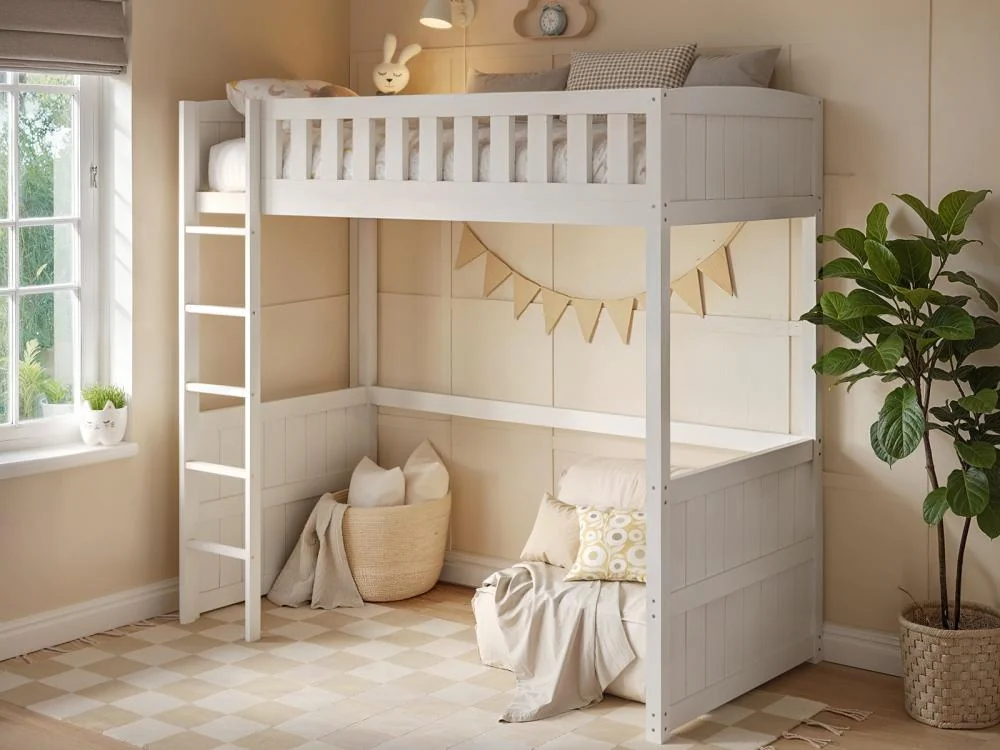
A child's bedroom should be the safest room in the house. Bed safety for kids comes down to a few key checks. From choosing the right frame to checking mattress fit, this guide covers everything you need to know, backed by UK standards, so bedtime stays safe and worry-free.
1. Choose the right bed size for their age
A bed that's too big or too small brings its own risks. Toddlers can roll or climb out of oversized beds, while older children outgrow smaller frames faster than you'd think. If you think it may be time for your child to move on from their cot, our article on signs your child is ready for a toddler bed explains what to look out for. Or, for a full breakdown of dimensions by age, read our guide to choosing the right bed size for your child.
2. Choose a child-friendly bed frame
Choosing a child-friendly bed frame starts with looking for a design that's sturdy, well-made and suited to your child's age and stage. Rounded edges, strong fixings and a stable frame all help create a safer sleeping space, especially for children who are likely to climb, move around or use their bed for more than just sleeping.
If you need help getting started, check out our kids' beds buying guide.
3. Check the bed regularly
A quick once-over every few months catches most problems before they become hazards. Look for:
- No sharp edges, splinters or protruding screws
- No gaps wider than 65mm on any side rail or slat, which could trap an arm or leg
- Ladders and guardrails are firmly attached with no movement
- No loose fixings, especially on bunk beds that get climbed on daily
- Bedding, curtains and any nearby furniture kept clear of the mattress edge
If anything feels loose or worn, it's worth fixing straightaway rather than waiting. Wood and metal frames both take daily wear from climbing, jumping and general play, so a quick check now saves a bigger repair later.
4. Take proper precautions with bunk beds, high sleepers and cabin beds
Elevated beds need extra care. UK safety standard BS EN 747 requires guardrails on both sides of the top bunk, set at least 16cm above the mattress, plus a fixed ladder with evenly spaced rungs. Manufacturers must label the bed clearly if the top bunk isn't suitable for children under six, and it's a rule worth following. Even confident climbers lack the balance and judgement to use a top bunk safely at night.
To ensure your child stays safe when using a raised bed, here are a few rules to follow:
- Only one child per top bunk at a time
- No playing on the bed frame or ladder
- Position bunks away from windows, light fittings and ceiling fans
- Fix the bed to the wall if the manufacturer recommends it
Our bunk beds, cabin beds and high sleeper beds are all built to meet current British safety standards, so you can choose any style without compromising on safety.
5. Choose the right mattress for the bed frame
A mattress is only safe if it fits. Gaps between the mattress and the frame can trap little limbs, so checking the fit is crucial. Always choose the mattress size recommended for your bed frame rather than guessing or trying to make a different size work. It should sit snugly inside the frame with no large gaps around the edges, giving your child a safe, supportive place to sleep.
A mattress that's too deep can also raise a child above the guardrail on a bunk or high sleeper, so stick to the manufacturer's recommended depth for that specific bed.
6. Check the firmness of the mattress
Firmness matters too. A good kids' mattress should feel firm and supportive rather than soft and squishy. That's because children's bodies are still growing, and a firmer mattress helps keep their spine properly supported while they sleep. If a mattress is too soft, they can sink into it, which can lead to poor sleeping posture and a less comfortable night's sleep. For younger children, an overly soft mattress can also make it harder for them to move freely or turn over during the night. Choosing a firm mattress that's right for your child's age gives them the support they need for a safer, more comfortable sleep.
Browse our range of kids' mattresses designed with growing bodies in mind, or our cot mattresses for the youngest sleepers.
7. Keep the sleep space clear
Loose items in a cot or bed are one of the biggest risks for younger children. For babies and toddlers, keep the sleeping area free of pillows, thick duvets, and soft toys until they're old enough to use them safely. Once your child moves into a bed, it's worth still keeping bedding fitted and secure rather than loose, so nothing can bunch up or ride over their face in the night.
8. Keep the room clear
Baby-proofing doesn't stop once they move out of a cot. Keeping the room clear and hazard-free reduces risk and worry. Blind and curtain cords should be short or fixed well out of reach, and any freestanding furniture near the bed should be anchored to the wall so it can't be pulled over. Keep the route to and from the bed clear of toys, shoes and storage boxes too, especially if your child gets up during the night to use the toilet or comes into your room after a bad dream. A clear path also makes it easier for you to reach them quickly if they need comfort or there's an emergency, without the risk of tripping over clutter in the dark.
9. Look for the right safety labels
Every bed and mattress sold in the UK should meet a specific British or European standard. Bunk beds and high sleepers should comply with BS EN 747, cots with BS EN 716, and mattresses should carry the correct fire safety labelling under the Furniture and Furnishings (Fire Safety) Regulations. These labels aren't just paperwork. They're the clearest sign that a product has been tested for the exact risks children face, from entrapment to flammability.
10. Double-check second-hand kids' beds
Second-hand beds are worth a closer look before you buy. While a pre-loved bed can be a more budget-friendly option, it's important to remember that older frames may predate current safety standards, and years of use can affect their strength and stability. Before bringing one home, check that the frame is in good condition with no cracks, damage, missing parts or loose fixings, and make sure any guardrails, ladders or safety features are still secure.
It's also worth checking the manufacturer's details and instructions where possible to confirm the bed meets the relevant UK safety standards, especially for bunk beds, high sleepers and cabin beds. If you're unsure of its age, condition or whether replacement parts are available, choosing a new kids' bed designed to meet current safety requirements can give you extra peace of mind.
Making sure your child's sleep space is safe doesn't need to be complicated. Get the size and mattress right, check guardrails and gaps on bunks, keep the sleep space clear, and look for the safety labels that confirm a bed's been properly tested. Browse our full range of kids' beds to find one that fits your child and your home.