
How to Choose the Best Mattress for Children
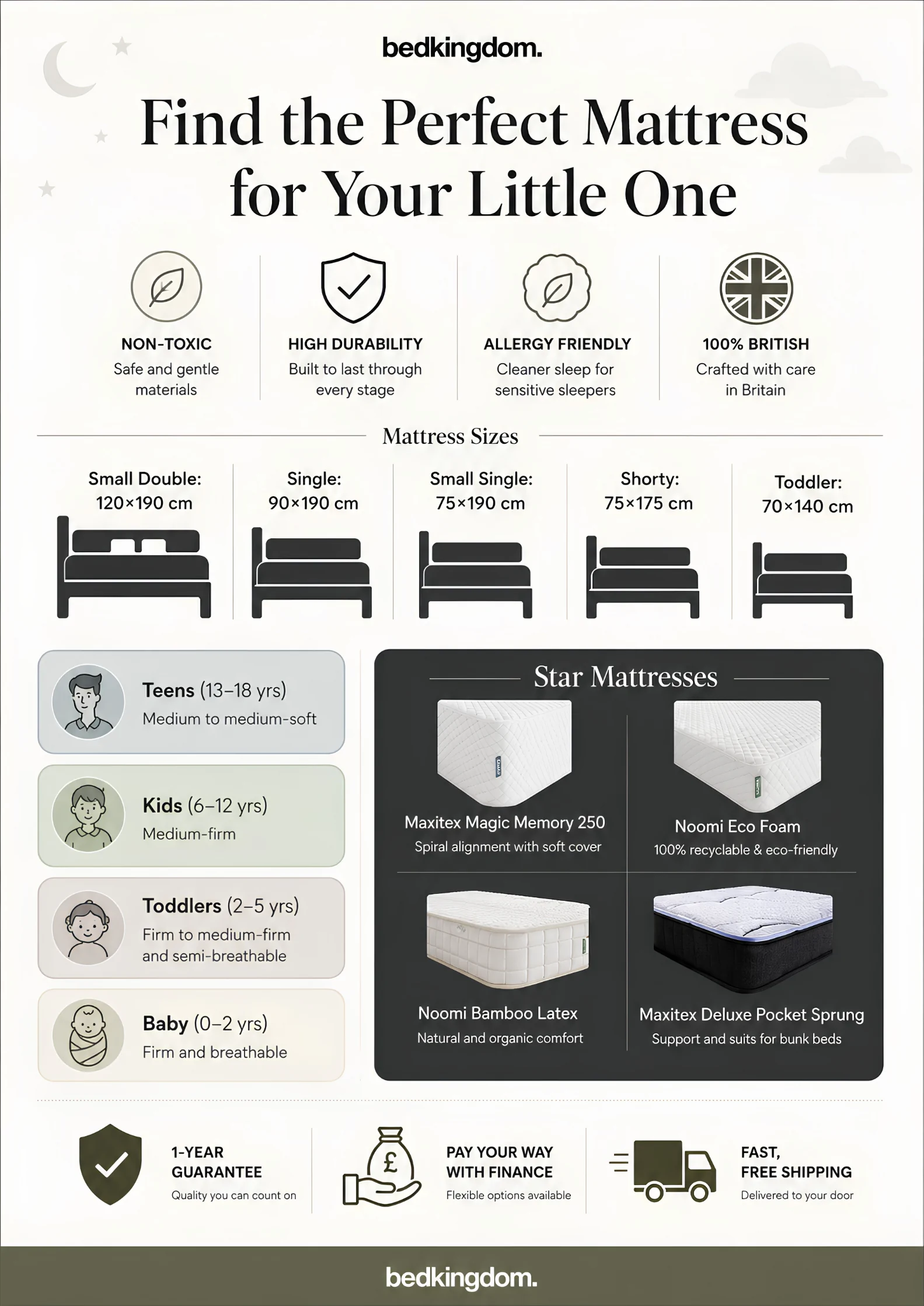
Choosing a mattress for your child isn’t simply a matter of finding one that fits the bed. Their age, preferred comfort level and type of bed all influence which mattress will provide the right balance of support and comfort.
This guide explains how to choose the best mattress for children, covering firmness recommendations, UK mattress sizes and practical features to look for. You’ll also find suitable options for babies, toddlers, school-age children and teenagers.
What Is the Best Mattress for Children?
The best children’s mattress is one that fits the bed frame correctly, provides age-appropriate support and creates a comfortable sleeping surface.
There isn’t one firmness or mattress material that works for every child. A baby has very different sleep requirements from a teenager, while a mattress for a bunk bed may need to meet different depth restrictions from one used on a standard single bed.
A good children’s mattress should offer:
- Appropriate support for the child’s age
- A close fit within the bed frame
- Comfortable and breathable materials
- Durable construction for everyday use
- A suitable depth for the chosen bed
- Clear information about materials and certification
Parents may also wish to look for non-toxic materials, allergy-friendly construction and covers that are easier to keep clean.
Children’s Mattress Firmness by Age
Your child’s age provides a useful starting point when deciding how firm their mattress should feel.
| Age group | Suggested firmness | What to prioritise |
|---|---|---|
| Babies aged 0–2 | Firm mattress | Breathability and a supportive, level surface |
| Toddlers aged 2–5 | Firm to medium-firm mattress | Support with a little extra comfort |
| Children aged 6–12 | Medium-firm mattress | Balanced support for sleep and growth |
| Teenagers aged 13–18 | Medium to medium-soft mattress | Comfort, pressure relief and support |
These recommendations are a general guide. Always check the guidance supplied with the mattress and bed frame before purchasing.
Mattresses for Babies
Babies generally need a firm and breathable mattress that fits their cot or cot bed closely. A firm surface provides consistent support without excessive sinking.
Measure the internal sleeping area carefully and choose the exact mattress size specified by the cot manufacturer. Avoid trying to fill gaps with blankets, cushions or mattress toppers.
Explore our range of cot mattresses to find sizes designed for babies and young children.
Mattresses for Toddlers
Between the ages of two and five, children will often be moving from a cot into their first toddler bed. A firm to medium-firm mattress can maintain dependable support while offering a slightly more cushioned feel.
Semi-breathable or breathable materials may also help create a fresher and more comfortable sleeping environment.
For a smooth transition, make sure the mattress fits the toddler bed correctly and doesn’t leave noticeable gaps around the edges.
Mattresses for Children Aged 6–12
School-age children often suit a medium-firm mattress. This firmness provides a useful balance between comfort and support without feeling excessively hard.
Durability is particularly important at this age. The mattress will be used every night and may also need to withstand reading, playing or the occasional bedroom den.
A reliable medium-firm option can work well with standard single beds, cabin beds and many mid sleepers.
Mattresses for Teenagers
Teenagers may prefer a mattress with a medium to medium-soft feel, particularly if they enjoy a more cushioned sleeping surface.
Memory foam and pocket-sprung mattresses can be useful options, depending on the teenager’s comfort preferences. Look for a mattress that supports the body evenly while offering enough room to sleep comfortably.
A standard single may be sufficient, although a small double bed can provide extra sleeping space where the bedroom allows.
Children’s Mattress Sizes Explained
Selecting the correct size is essential. Even a high-quality mattress won’t perform properly if it is too large or too small for the bed frame.
| Mattress size | Dimensions | Common uses |
|---|---|---|
| Toddler | 70 x 140cm | Toddler beds and converted cot beds |
| Shorty | 75 x 175cm | Compact children’s beds and smaller rooms |
| Small single | 75 x 190cm | Narrow beds and space-saving bedrooms |
| Single | 90 x 190cm | Standard children’s and teenagers’ beds |
| Small double | 120 x 190cm | Older children, teenagers and guest rooms |
Toddler Mattress
A 70 x 140cm toddler mattress is commonly used with toddler beds and some convertible cot beds. Check the product specifications carefully, as not every cot bed uses the same mattress size after conversion.
Shorty Mattress
At 75 x 175cm, a shorty mattress is narrower and shorter than a standard single. It can be a practical choice for younger children and compact bedrooms where every centimetre matters.
Small Single Mattress
A small single mattress measures 75 x 190cm. It provides the full length of a single mattress while using less floor space, making it useful in narrow bedrooms.
Single Mattress
The UK single mattress size is 90 x 190cm. It is widely used with children’s beds, bunk beds, mid sleepers and high sleepers.
Because it is a standard size, it also gives you plenty of choice when selecting mattress materials and firmness levels.
Small Double Mattress
A small double mattress measures 120 x 190cm. It offers more width than a single without taking up as much room as a standard double.
This can be a comfortable option for teenagers, older children or guest bedrooms. Browse our small double mattresses to compare different comfort levels and constructions.
How to Choose the Best Mattress for Children
Measure the Bed Frame First
Never rely on the bed’s appearance or product name alone. Measure the internal mattress area and compare it with the manufacturer’s specifications.
The mattress should sit neatly within the frame without being forced into position or leaving excessive gaps.
When replacing an existing mattress, don’t assume it is the correct size. Measuring again only takes a few minutes and can prevent an expensive mistake.
Match the Firmness to Their Age
Use your child’s age as the starting point:
- Babies usually require firm support
- Toddlers often suit firm to medium-firm mattresses
- School-age children commonly benefit from medium-firm support
- Teenagers may prefer medium to medium-soft comfort
Personal preference still matters, particularly for older children. A teenager who dislikes sinking into their mattress may be happier with a medium-firm model than a softer option.
Consider the Mattress Material
Different mattress constructions provide different sleeping experiences.
Foam mattresses tend to be lightweight and straightforward to handle. Memory foam mattresses can offer a more cushioned, body-contouring feel, while pocket sprung mattresses provide individual support across them.
Latex mattresses can deliver a responsive sleeping surface, while bamboo and other naturally inspired materials may appeal to shoppers looking for breathable comfort.
Check the Mattress Depth
Mattress depth is especially important for bunk beds, cabin beds, mid sleepers and high sleepers.
A mattress that is too deep can reduce the effective height of the safety rails. Always follow the maximum mattress depth stated by the bed manufacturer, even when a thicker mattress appears more luxurious.
For raised beds, look for mattresses specifically described as suitable for bunk or cabin bed use. At Bedkingdom, we strongly recommend mattresses no thicker than 16cm.
Look for Practical Features
Children’s mattresses need to cope with everyday family life. Useful features may include:
- Durable construction
- Breathable materials
- Allergy-friendly fillings
- Non-toxic materials
- Removable or easy-care covers
- Clearly stated certifications
Focus on the features that will make the mattress comfortable and practical rather than choosing based on thickness alone.
Children’s Mattresses to Consider
The right model will depend on the bed, your child’s age and their preferred sleeping feel. The infographic highlights several options for different requirements.
Maxitex Magic Memory 250
The Maxitex Magic Memory 250 combines a supportive mattress construction with a soft cover. Its memory foam feel may appeal to older children and teenagers who prefer gentle cushioning and balanced spinal support.
Noomi Eco Foam Mattress
The Noomi Eco Foam is a lightweight option designed with eco-conscious comfort in mind. It is described as 100% recyclable and may be particularly convenient for children’s beds where the mattress needs to be lifted or repositioned regularly.
Noomi Bamboo Latex Mattress
The Noomi Bamboo Latex mattress provides naturally inspired comfort with a responsive feel. It may suit families looking for an alternative to traditional foam or sprung mattresses.
Maxitex Deluxe Pocket Sprung Mattress
The Maxitex Deluxe Pocket Sprung mattress uses individually responding springs to provide support across the sleeping surface. It is also highlighted as a suitable option for bunk beds, subject to the bed frame’s mattress-size and depth requirements.
Explore our full range of children’s mattresses to compare foam, sprung and specialist options.
Common Children’s Mattress Buying Mistakes
Guessing the Mattress Size
Terms such as “children’s bed” or “junior bed” don’t guarantee a particular mattress size. Always check the dimensions in centimetres.
Choosing the Thickest Mattress
A thicker mattress isn’t automatically more comfortable or supportive. On raised beds, excessive depth can also interfere with the safety rails. We strongly recommend mattresses no thicker than 16cm if using with a bunk bed, cabin bed, or high sleeper bed.
Buying for Them to Grow Into
A mattress should suit your child’s current bed and support requirements. Buying an oversized mattress before upgrading the bed can result in an unsafe or uncomfortable fit.
Ignoring the Bed Manufacturer’s Guidance
The bed’s instructions may specify the required mattress size and maximum depth. These details should take priority over general recommendations.
Focusing Only on Softness
Children don’t necessarily need a very soft mattress. Support, fit and breathability are just as important as the initial cushioned feel.
Quick Tips for Choosing a Children’s Mattress
Measure the bed before shopping and write down its internal dimensions. Check both the length and width, as well as any mattress-depth restriction.
Choose firmness according to your child’s age, but include older children and teenagers in the decision where practical. Their comfort preferences can help you narrow down the options.
Finally, check the materials, care instructions, guarantee and delivery details before ordering. A practical mattress should be easy to live with as well as comfortable to sleep on.
Why Shop for Children’s Mattresses at Bedkingdom?
Bedkingdom offers mattresses for toddler beds, standard singles, small singles, shorty beds and small doubles, helping you find the right fit for different ages and bedroom layouts.
The mattress range highlighted in the infographic also offers practical shopping benefits, including a one-year guarantee, flexible finance options and fast, free shipping.
You can browse mattresses alongside compatible children’s beds, making it easier to check sizes and choose a combination that works for your child’s room.
Frequently Asked Questions
What firmness is best for a child’s mattress?
Babies generally need a firm mattress, while toddlers often suit firm to medium-firm support. Medium-firm mattresses are a popular choice for children aged six to twelve, while teenagers may prefer a medium or medium-soft feel.
What size is a standard children’s mattress?
A standard UK single mattress measures 90 x 190cm. However, children’s beds can also use toddler, shorty or small single mattresses, so always check the bed frame dimensions before ordering.
What size mattress does a toddler bed need?
Many toddler beds use a 70 x 140cm mattress. Some convertible cot beds use different dimensions, so check the manufacturer’s specifications rather than assuming the size.
Can you use a standard mattress on a bunk bed?
A bunk bed may use a standard single mattress, but the mattress must also meet the bed’s maximum depth requirement. A mattress that is too deep can reduce the height of the upper safety rails.
Is a memory foam mattress suitable for children?
Memory foam can suit older children and teenagers who enjoy a more cushioned feel. Check the firmness, depth and age recommendations to make sure the mattress is appropriate for the child and their bed frame.
How often should you replace a child’s mattress?
Replace the mattress when it no longer provides comfortable, even support or shows significant sagging, damage or wear. It may also need replacing when your child moves into a different bed size.
Find the Right Mattress for Your Child
The best mattress for children should fit the bed correctly, provide suitable support and match the child’s stage of development. Babies need firm, breathable surfaces, while older children may benefit from medium-firm or more cushioned options.
Measure carefully, check mattress-depth limits and choose practical materials designed for everyday use. Explore the children’s mattress collection at Bedkingdom to find a comfortable fit for toddler beds, bunk beds, single beds and growing teenagers.